🔴 Live • 22:11PM

― Pía Valeria Choi ~☆
Pretty on the outside but like a fruit the bugs have eaten from within
• Pía's gallery !










Marry the Night - Lady Gaga ‣ 0:52/4:25 ━━━●──────── ♫

(^_-) ☆ online now!
| The lie of it all is much more honest, because i invented it |
| A food Spaghetti, A color Pink, A season Winter, A book My Sweet Audrina, A flower Jasmine, A singer Lady Gaga A movie Helter Skelter |
| Family Tamara Benítez (mom) Choi Joon-ho "Julián" (dad) Choi Dara † (grandma) |
☆ She doesn't really like the name Pía, but her mom loves it.
☆ She folds paper cranes whenever her hands need something to do.
☆ She has a tendency to give people nicknames without asking for permission first.




EARLY CHILDHOOD
Pía Valeria Choi was born on November 22, 1999, to Tamara Benítez and Choi Joon-ho, "Julián", two people who imagined very different futures for her. Tamara, a photographer, had dreamed of becoming a mother for years and quickly made Pía the center of her world, filling albums with photographs as though every ordinary afternoon deserved to be preserved. Julián, who owned a theatre, spoke of her less as a daughter and more as the person who would one day inherit everything he had built.When Pía was five, her parents divorced. The divorce was quiet, but the tension it left behind lingered long after the papers were signed. Tamara became fiercely protective, always carrying the quiet fear that something terrible might happen to her daughter. Julián, by contrast, remained more distant. He cared in his own way, though his affection was often difficult to recognize beneath his reserve.Some of Pía's happiest memories belong to the years that followed. Much of her childhood was spent with her paternal grandmother, Dara, who never stopped treating Tamara as family despite the divorce. Afternoons with her felt untouched by everything else, filled with tea parties, delicate pastries, and the soft fragrance of fresh jasmine drifting through the house.Those memories almost always include Nina. They met when they were only two years old and, before either of them understood what friendship meant, had already become inseparable. To everyone around them, they seemed to exist as a pair, moving through childhood side by side with the kind of certainty that only children possess.At some point, things began to shift. Pía can't pinpoint exactly when, maybe she was six, maybe nine, but something dark and heavy settled into her world. From then on, her grandmother and Nina became her only true sense of refuge.TEENAGE YEARS
Pía remembers very little of her teenage years. They blur together into something shapeless, difficult to separate one day from the next. What remains are scattered fragments, long nights spent staring at the ceiling, the sting of fresh bandages hidden beneath long sleeves. She hurt herself without trying to conceal it, almost as if some part of her wanted someone to notice while another hoped no one ever would.She never found a reason she could point to. There was no single moment when everything fell apart, only the slow realization that living had begun to feel unbearably heavy.She still carries guilt for what those years put her mother and grandmother through. Their concern surrounded her constantly, quiet but unwavering, and although she saw it, she never knew how to lessen it.Her relationship with her father grew increasingly distant. Conversations became shorter, silences longer. Pía convinced herself he no longer liked the person she was becoming, though neither of them ever found the words to say it aloud. Eventually, silence became the only language they truly shared.Through it all, Nina remained the one certainty in her life. They grew alongside one another until it became difficult to imagine one without the other. They promised that nothing would ever come between them, and Pía believed it with the quiet certainty only teenagers can possess. To everyone around them, they seemed inseparable. For a long time, it felt impossible to imagine a Pía without Nina.CURRENT LIFE
Adulthood is quieter than the years that came before it. Better, in ways Pía rarely feels the need to explain, but quieter all the same. The weight she carries has changed rather than disappeared, settling into something she has simply learned to live alongside.For a time, she studied literature, hoping to build a future that belonged entirely to her. Her days settled into a gentle routine: lectures in the morning, long afternoons spent at the hospital beside her grandmother, Dara. She remained there for more than a year, holding onto conversations, shared silences, and the hope that tomorrow might look different. When Dara passed away, Pía left university soon after. She never found her way back.Not long afterward, she lost Nina too.The friendship that had shaped nearly every chapter of her life ended as suddenly as it had begun. It wasn't distance or time that separated them, but a betrayal Pía has never spoken about. She rarely allows herself to think about it, yet its absence lingers in everything that followed.The things that once brought her comfort have become difficult to bear. She no longer attends tea parties, and the scent of fresh jasmine, once woven through some of her happiest memories, now feels almost suffocating, carrying her back to a life she can never return to.Time has softened some relationships and hollowed out others. Her father remains a distant presence, someone she exchanges occasional messages with, usually after she reaches out first. There is no anger left between them, only the quiet ache of two people who slowly became strangers.Her mother, meanwhile, has become the person she trusts most. They speak often and laugh easily together, but Pía is careful with the parts of herself that still hurt. She has grown skilled at disguising grief as ordinary conversation, determined not to burden the woman who has already carried so much of it beside her.Now Pía lives in Las Acacias, where she works as a model, a career she drifted into after spending much of her childhood in front of her mother's camera. She never imagined herself pursuing it, but over time it became her way of making a living. She enjoys the quiet moments between shoots far more than the work itself: the train rides home, afternoons spent browsing bookshops, evenings folding paper cranes at her kitchen table. They are small routines, but they remind her that a life does not have to be extraordinary to be meaningful.
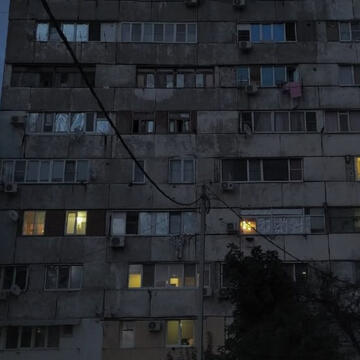
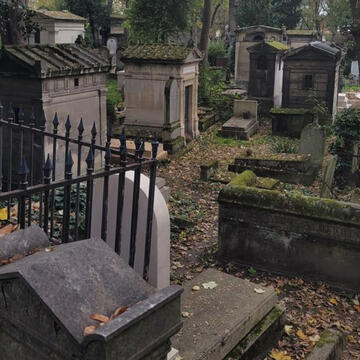
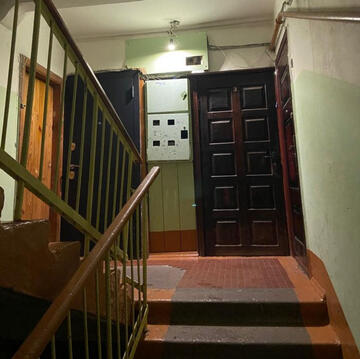
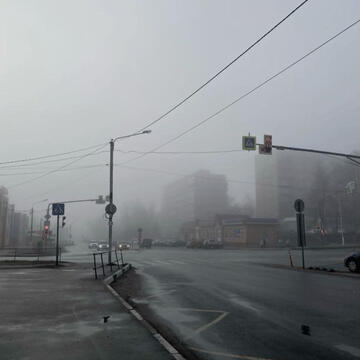
Pía lives alone in Apartment 4C of Residencial Los Álamos, an aging apartment building in Barrio Oeste, Las Acacias, Buenos Aires, Argentina. From her window, she overlooks the old Municipal Cemetery, where worn gravestones gradually disappear into the city's endless fog.Las Acacias is one of the older neighborhoods of Buenos Aires, known for its aging apartment blocks, abandoned factories, rusting railway lines, and narrow avenues darkened by cold rain. Once an important industrial and railway district, much of the neighborhood still carries traces of the city it used to be: weathered storefronts, old workshops, forgotten warehouses, and buildings that have stood for generations.Despite its worn appearance, Las Acacias is quietly alive. Commuter trains still stop at weathered stations, neighborhood shops still open each morning, and apartment windows begin to glow as daylight fades behind the clouds. People move through the rain with the familiarity of those who have learned to live with the neighborhood's endless grayness.There is a haunting beauty to Las Acacias. Its rain-soaked streets and forgotten buildings seem to preserve the echoes of everyone who has passed through them, creating the unsettling yet comforting feeling that the neighborhood quietly remembers the people who once called it home.